

Happy New Year! So, I almost wrote this post last night. For those of you who have been with The Freedom Academy for a while, you know that rather than doing New Year’s resolutions, I like to list retrospective accomplishments from the year before. In that vein, my big plan was to list all of the (many!) positive things that happened in defense of democracy in 2025 — from individuals who resisted to court decisions and grand jury no bills to protests — that should give us hope and energy for the year ahead.
And then I woke up and found out the U.S. had kidnapped a foreign head of state and plans to prosecute him in federal court. Immediately, I got a flashback to this SNL skit:
Cut to scene: “So we decided to just go in and abduct Maduro and put him on trial in the U.S…. BAD IDEA.”
So look, Maduro is definitely a bad hombre, as Trump would say. But there are a number of reasons why this is incredibly problematic, both from a domestic and international law perspective. I’m sure this will be teased out much more in the coming days and weeks (assuming we ever see the legal justification used by the Trump administration), but here are just a few of my initial observations:
1. Trump Did Not Have a Constitutional Basis to Attack/Invade Venezuela
We’ve been seeing for months that the Trump administration has been trying to make “fetch” happen — “fetch” in this case being the claim that the U.S. is somehow under imminent attack from Venezuelan drug traffickers (who ostensibly belonged to “designated terrorist organizations”) controlled by Maduro, thereby making the drug boats legitimate military targets in self-defense, even in the absence of congressional authorization for the strikes. As I explained in my piece here, that argument just doesn’t fly (or float, as it were).
Right now it’s unclear whether the Trump administration is extending that “self-defense” justification to entering a sovereign country to abduct its head of state. Some indications point in that direction — the U.S.’s invasion of Panama is a precedent being invoked. To be sure, in that case President George H.W. Bush did not get congressional authorization prior to invading Panama, capturing dictator Manuel Noriega, and bringing him back to the U.S. to stand trial on drug charges…all of which seem like parallels with the case in Venezuela. However, it’s worth noting that in the case of Panama, Noriega had first declared that his country was in a “state of war” with the U.S., threatened U.S. citizens living in that country, and Panamanian Defense Forces had killed a U.S. Marine. The U.S. also had an Air Force base in Panama. It was still a pretty thin self-defense argument, but at least plausible. So far, though, there is no indication of any overt violence from Venezuela on U.S. citizens, personnel, or interests.
Another rationale I am seeing floated (based on a tweet from Mike Lee, which already makes it suspect), is that the U.S. was effecting a criminal arrest of Maduro, and U.S. military were present only in their “protective function” to protect the U.S. officials arresting Maduro. The idea here is one the Justice Department has invoked since the Bill Barr I days (back in the 90s), namely that under Article II, the President has “inherent authority” to deploy military to protect federal buildings and officers. (This was the underlying argument made for deploying the National Guard during the George Floyd protests and more recently as part of ICE’s immigration raids.) Under this rationale, the administration wouldn’t need congressional approval because Trump is acting under exclusive authority under his 1) Commander in Chief power and 2) Take Care power.
I’m not even sure what to say about this argument. If this is legitimate, then it means that the U.S. can use military force to enter a foreign country whenever it wants based on a U.S. criminal indictment? (Normally these are handled pursuant to Mutual Legal Assistance Treaties, though those are admittedly less effective when the criminal you are after is the leader of the country.) Not for nothing, but if the Trump administration is claiming that the issue with Venezuela and Maduro is really at heart a criminal law matter, it is undercutting it own justification used for military force against drug boats — which also are squarely covered by U.S. criminal laws.
2. This is Illegal Under International Law
I probably don’t need to belabor this and I’m not sure who needs to hear it, but you just can’t invade other countries whose leaders you don’t like. It’s a violation of the U.N. Charter, which requires under Article 2 that all members “refrain in their international relations from the threat or use of force against the territorial integrity or political independence of any state.”
3. Maduro (Currently) Has Immunity from Prosecution in a Foreign Jurisdiction
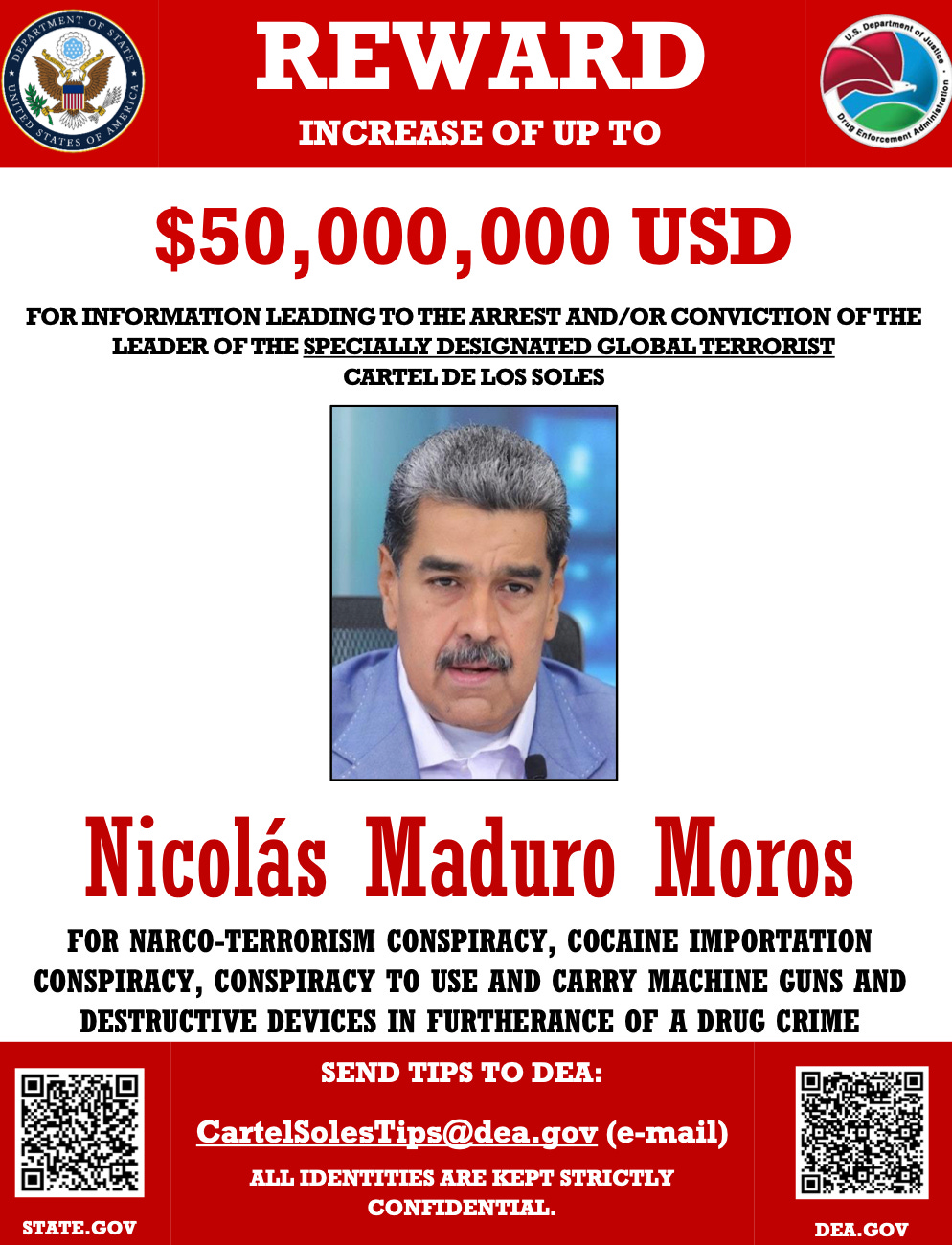
In March 2020, Maduro was indicted in the Southern District of New York with narco-terrorism, conspiracy to import cocaine, possession of machine guns and destructive devices, and conspiracy to possess machine guns and destructive devices. Today, Attorney General Pam Bondi stated that Maduro will stand trial on these charges.
But there’s a problem. As a sitting head of state, Maduro enjoys head of state immunity for acts performed in their official capacity — sort of the international law version of the kind of immunity the Supreme Court granted to Trump two years ago. Importantly, international head of state immunity isn’t absolute — a country’s leader can be held accountable for crimes against humanity, for example — but only after he is no longer in office. (This was an issue brought to the fore by the arrest and extradition of Augusto Pinochet from the U.K. to Spain in 1998.) In other words, there is a distinction between what a head of state can be prosecuted for and when he can be prosecuted. American University law professor Bec Hamilton explained it to me like this:
HoS immunity as we talk about in relation to a sitting HoS is immunity ratione personae - ie - you can’t haul a sitting president into a domestic court, no matter what they’ve done. What [the Pinochet example] is talking about is immunity ration materiae - which is that you can’t prosecute someone for the official acts they did as president. What the Pinochet decision did…was to say, well if it’s torture then you don’t get to call it an official act and get the immunity ratione materiae [defense]. But it didn’t touch the immunity ration personae (ie you can’t actually prosecute someone for the torture they commit as President until they are out of office — as Pinochet was).
Of course, what the Justice Department has indicted Maduro for isn’t even crimes against humanity (even though he has been accused by the U.N. of engaging in them) — it’s for drug and gun offenses, which under the principles laid out above wouldn’t even be prosecutable once he left office.
[I should also add that the Noriega example can be distinguished here because although he controlled the government and was the head of the military, he was not the president of Panama or official head of state.]
4. If Maduro Does Not Have Immunity from Prosecution, The World is in Big Trouble (including the U.S.)
What the administration will try to argue, no doubt, is that Maduro is not a legitimate president, and therefore does not enjoy head of state immunity. That argument, as we say in the law, is a slippery slope.
To be sure, Maduro has been accused by the international community of holding sham elections, and in 2018, fourteen Latin American countries and Canada refused to accept the legitimacy of the vote that reelected Maduro. Since then, the U.S. and number of other countries and international bodies have recognized the president of Venezuela’s National Assembly, Juan Guaidó, as the country’s leader. (However, in a tweet this morning, Trump seems to recognize Maduro as Venezuela’s president so…who knows?)
Still, it seems to me that whether Maduro is the legitimate leader of Venezuela is a factual question that would need to be determined in some kind of adjudicatory body. Otherwise, it would open up a whole new can of worms. If the ability to invoke head of state immunity is based merely on international recognition of foreign leaders alone, then it opens up a lot of bad incentives and potentially emboldens bad actors. Consider what it does to the legitimacy of, say, Russia’s invasion of Ukraine, where Putin does not recognize President Zelensky’s presidency as legitimate? And which countries’ recognition would count, and which ones wouldn’t?
That’s an especially important question to answer because under U.S. law (as articulated in a 215 Supreme Court case called Zivotofsky v. Kerry), the President has sole and exclusive authority to recognize foreign governments and heads of state. If what we’re setting up here is the proposition that any leader Trump thinks is “illegitimate” is fair game to be kidnapped and hauled into U.S. courts, well…you can see how that might create some big international problems.
There’s another reason that the U.S. has typically tried to observe international norms, like not arresting foreign heads of state, or not assassinating foreign officials…because it protects us, as well. It’s true that that another country would not realistically have the ability to pull a Noriega or Maduro number on us. But imagine if some foreign leader believed, say, Trump’s claims about the 2020 election being “rigged,” and decided that was enough to invade the U.S. and abduct Joe Biden during his presidency and put him on trial in some foreign country. I mean, what??
Like I said, Bad. Idea. Jeans.
Those are my initial thoughts but I’ll write more as things develop. In the meantime, after a long break (sorry, we were both traveling!) Renato and I were back on the pod. This week we discussed DOJ’s noncompliance with the Epstein files, and some of the issues raised by the CIA’s strike in Venezuela (which I think are still relevant even after today). I hope you’ll check it out:
Upcoming Events
I’m so excited to begin the new theme for my Substack in the New Year: Understanding what makes people complicit in bad behavior, and learning from the people who take a stand against it. The research I am doing for my book, Uncompromised: Activating Your Moral Compass in an Age of Complicity, shows that people are better able to resist pressure and stand up for their beliefs when they can reflect on their own values and see models of moral courage in action.
To this end, I’ll be writing free posts on these topics each month, in addition to my weekly Round Ups, on the topics of complicity and courage. But for my paid subscribers, I’ll also be bringing in guest speakers: Each month I’ll have one person — like a psychologist, professor, leadership expert — explain the science and theory behind complicity and courage. And then I will also bring in a real-time moral rebel who can talk about what led them to take a stand — despite the personal and professional risks. I hope you will tune in!
Here’s who I have coming up for January:
Professor Catherine Sanderson, author of Why We Act: Turning Bystanders into Moral Rebels, Wednesday, January 14, 12-1 p.m. EST. Professor Sanderson’s
work covers the psychology of bystanders — the social and cognitive forces that keep people from stepping up, and how we can change them. I can’t wait to hear her takes on the current moment!
Alexander Vindman, author of the Why It Matters Substack and Here, Right Matters: An American Story (Date/Time TBA, we are still figuring out schedules!). I have been a huge fan of Alex Vindman ever since he came into the spotlight and testified in Trump’s first impeachment hearing. If you, like me, are inspired by his example and want to learn more about his story, please tune in.
And, we’ll be kicking off 2026 with a guest author for The Freedom Academy Book Club, as well:
Freedom Academy Book Club, Agents of Change: The Women Who Transformed the CIA by Christina Hillsberg Tuesday, January 27, 2026, 12-1 p.m. EST. Christina interviewed women from different eras of the CIA and paints a picture of what being a female spy in the agency was really like through the decades. Zoom link will be sent to paid subscribers three hours before the event.
Zoom links for guest speakers are sent three hours before the event, and the discussions will be recorded and posted for those who cannot make it live. I hope you can join us!
Join me and Renato in Alaska!
It’s Complicated is cruisin’! Come join me and Renato as we explore the stunning beauty of Alaska and discuss how we can work together to protect our democracy! It’s a small ship, and there will be lots of opportunities to talk to us both, plus we will have an opening and closing reception and dedicated democracy discussion tables throughout the cruise. You can find out more at this link, and fill out your info here to have an agent call you with more information. Stay tuned for our next happy hour/info session!

‘Rise like Lions after slumber
In unvanquishable number—
Shake your chains to earth like dew
Which in sleep had fallen on you—
Ye are many—they are few.’
— The Masque of Anarchy by Percy Bysshe Shelley, stanza XXXVIII
It is mortifying to watch as someone who spent years in the foreign service defending the rules-based international order.
When the U.S. conducts airstrikes on a sovereign capital, extracts a head of state via special forces without congressional authorization, and announces it on social media from a private resort, we’ve just demolished every argument we’ve made about Ukraine for the past three years.
From a diplomatic perspective, this is catastrophic.
Every international law argument we’ve made: sovereignty matters, territorial integrity is inviolable, regime change by force is illegal, the UN Charter means something; just became “rules for thee but not for me.”
We just became the thing we claimed to oppose. And every person still there knows it, even if they can’t say it publicly. And frankly, it’s pathetic that they will still work for this regime. Disgusting…
That’s the real cost of this operation, not just Venezuelan lives, but American credibility on every principle we claimed to defend.
—Johan
I’m impressed with your ability to bring me so much information on this current debacle so quickly. Thank you for sharing your expertise. Glad I have you and Renato to watch today.